Found the content on this page useful? Share it with your team!
Winning AEC Proposals: Where AEC Projects Go Wrong

.png)
Table of Contents

Picture the last pursuit your team submitted under real pressure. The RFP dropped late. Content arrived in pieces. Someone caught a compliance gap the night before the deadline. You got it out the door. You always do.
But somewhere in the back of your mind, you knew the proposal didn't reflect what your firm can actually do.
That gap, between what your firm can do and what your proposal proves, is where most AEC firms lose shortlists they should have won. Winning proposals aren't just better written. They're built on a better pursuit process: cleaner go/no-go discipline, stronger content control, earlier quality checks, and institutional knowledge that's ready before the RFP lands.
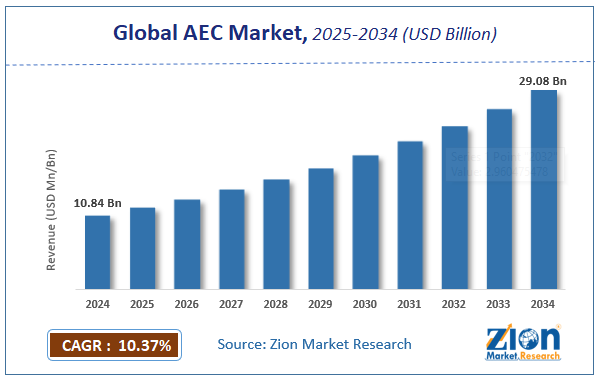
The global AEC market is projected to reach $29.08 billion by 2034, according to Zion Market Research. More pursuits, leaner teams, and the same scattered content problem. The firms that fix the knowledge layer now will be the ones positioned to compete at that volume.
Why pursuits lose before being read
Evaluators notice quality before they notice depth. That doesn't mean the technical approach is secondary. It means presentation, consistency, compliance, and clarity shape whether the evaluator trusts the technical approach in the first place.
Most pursuit teams know this from experience. The final 48 hours are where the cracks show. A principal sends a bio that hasn't been updated in two years. The transportation project description sounds nothing like the one used in the water section. The Dallas office uses one template. Denver, of course, has another. Someone catches a missing compliance item after the near-final review, when there's barely time to fix it.
Evaluators don't give firms the benefit of the doubt. The proposal either earns trust or it doesn't.
What a broken process looks like
Think about how rigorously your firm manages quality on the project side: drawings move through review, specifications get checked, punch lists exist for a reason. No one would hand a client a drawing package where the title block changes halfway through the set and the callouts contradict each other.
But that's exactly what happens with too many proposals.
Usually, the breakdown starts well before the draft. It starts when your firm has no single source of truth for approved content, no clear owner for voice and consistency, and no process for checking quality until the end.
Proposal problems that cost firms shortlists
Most proposal problems are easy to spot after a loss. The same issues show up again and again.
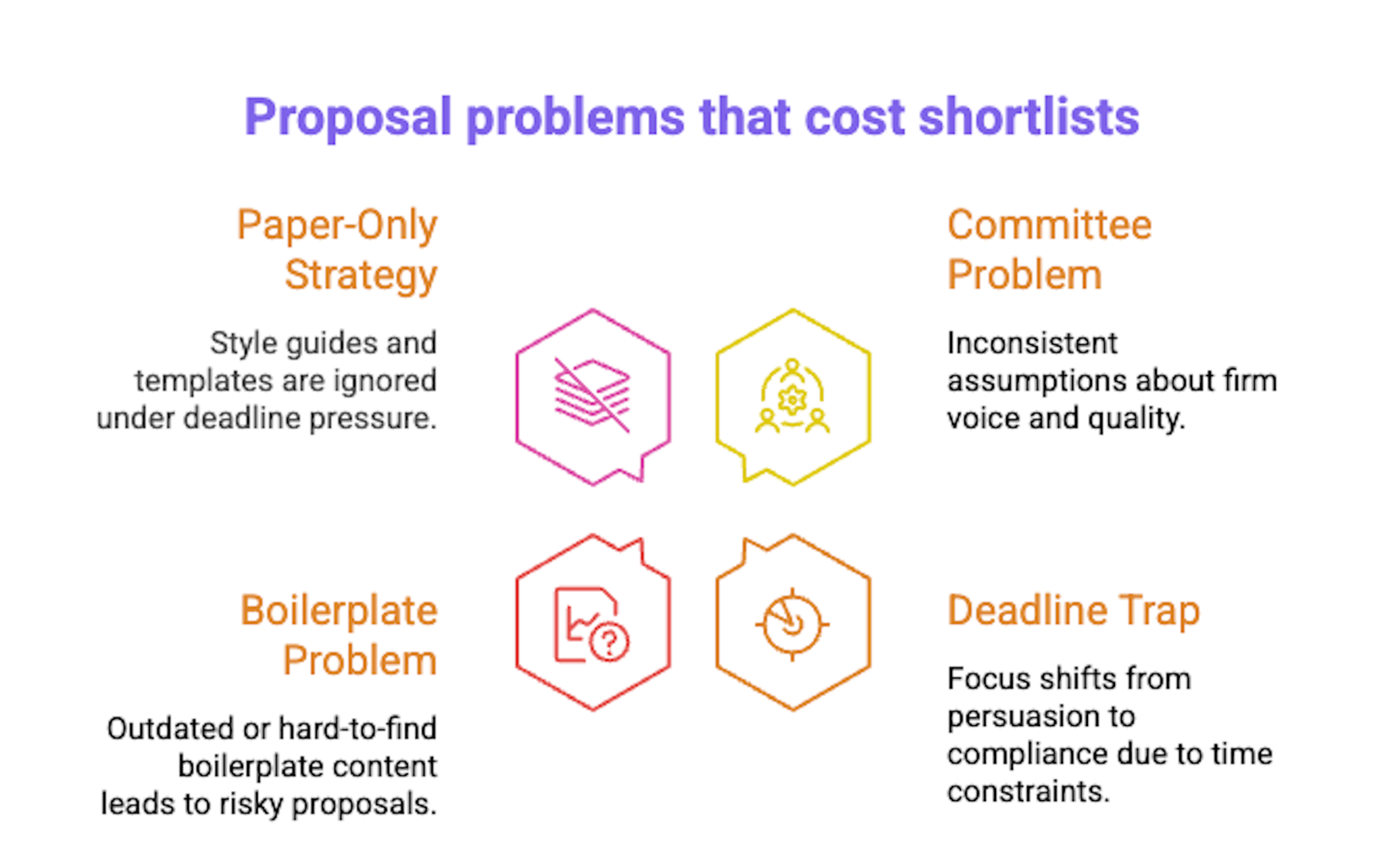
1. The committee problem
A typical mid-sized AEC proposal has several contributors before it reaches the finish line. The project manager writes the technical approach. A principal sends a few bullet points. Marketing pulls boilerplate from the last three pursuits. A different office contributes project sheets, resumes, and references.
They all work inside different assumptions about what the firm's voice, quality bar, and best evidence should look like. The proposal reads like it was assembled, not authored. That sends a signal about how your firm works internally. It may not be fair, but evaluators read that signal.
“We had a major water authority pursuit last year," one marketing director told us. "Three offices contributed content. None of them had seen each other's sections until the day before submission. The principal read the final draft and said it sounded like three different firms."
2. The deadline trap
The RFP drops. The team scrambles to parse requirements. Technical staff are pulled in between billable work. Draft content arrives late. The proposal coordinator spends the final stretch stitching, formatting, chasing, and checking.
By the time someone asks whether the proposal is persuasive, the team is already focused on whether it's compliant. Quality didn't fail at the end. It was never built in.
The fix isn't a better final review. It's moving the right checks upstream: compliance matrix at kickoff, approved boilerplate before drafting starts, section owners named early, review checkpoints before the document is near-final, and a clear standard for what "ready" actually means.
"By Thursday night, we weren't asking 'is this proposal strong?' We were asking 'is it done?'" said another proposal manager at a civil engineering firm. "Those are very different questions, and we were answering the wrong one."
3. The boilerplate problem
Every firm thinks it has a boilerplate. Very few firms have approved content that people can actually find, trust, and reuse.
Standard capability statements, methodology language, safety records, firm history, resumes, and project descriptions should be current before the next pursuit starts. In practice, they live across shared drives, old proposals, InDesign files, local folders, and someone's memory.
That's how easy content becomes risky content. A project description may list an outdated contract value. A resume may miss the person's strongest relevant experience. A capability statement may reference a market focus the firm has moved away from. None of this happens because the team lacks discipline. It happens because the content system doesn't protect them.
Here's how one proposal coordinator described it:
“Going in and finding what I'm looking for and dropping it into a template is a nightmare. And the version I manage to find is often missing the mark on pretty much everything.”
4. The paper-only strategy
Most firms have style guides, proposal templates, and brand standards. Those documents matter. But they don't enforce themselves under deadline pressure.
Style guides don't get opened at 10 p.m. Templates get modified because this pursuit is "a little different." Voice guidelines get ignored because the technical lead writing the section has never seen them.
The result is a gap between the standard the firm believes it has and the standard the proposal actually meets. Most firms won't find out the standard slipped until after the loss debrief. Sometimes not even then.
Structuring a proposal to win
A winning AEC proposal is structured around the evaluator's job. The executive summary should speak directly to the client's stated priorities. The technical approach should mirror the evaluation criteria and show how your firm will reduce risk, not just complete tasks. Resumes should connect each person's experience to the specific project need. Project examples should be curated, not dumped.
The best proposals answer three evaluator questions quickly:
- Does this firm understand what matters on this project?
- Has this team solved this kind of problem before?
- Can I score this proposal confidently against the criteria in front of me?
That third question gets overlooked. Evaluators aren't reading for enjoyment. They're scoring under pressure. A clear proposal makes their job easier, rather than making them work for every point.
Structure also applies to the process behind the document. Every section needs an owner. Every owner needs a deadline. Every deadline needs a review checkpoint. Your team should know when compliance gets checked, when voice gets checked, and when the proposal is ready for strategic review.
Without that structure, sections get written in isolation and assembled at the end. That's when consistency breaks down.
What winning AEC proposals have in common
Winning proposals share a few traits that have nothing to do with clever language.
1. They read like one firm
Not one office, not one practice group, not the transportation team's version of the story. One firm. The voice holds from the executive summary through the resumes. The project examples connect to the client's stated priorities. The evaluator doesn't have to reconcile four different tones and decide which one to trust.
2. They are easy to score
Most evaluators are not reading for enjoyment. They're looking for the answer to a specific question, and if your proposal makes them hunt for it, the score reflects that. Mirror the RFP structure, answer the criteria directly, and put your strongest evidence where they expect to find it.
3. They use specific evidence
“Extensive experience in transit projects" tells an evaluator nothing they can write down. A named project, a delivery challenge your team solved, a measurable result, a team member who has done this exact work before is what moves a score.
4. They treat compliance as a signal instead of checking a box
A missed requirement doesn't just cost points. It tells the evaluator the team wasn't paying close attention. The firms that win consistently don't save compliance for the night before the deadline. They build it into the pursuit from the start, so the final review is confirmation, not discovery.
Where the review stage breaks down
Most firms treat the final review as the place where quality gets controlled. In practice, it's where quality problems get discovered too late.
A principal reads through the near-final draft. The coordinator catches obvious typos. Someone checks the RFP requirements against the finished document. But at that point, there's rarely room to fix the deeper issues: weak win themes, uneven voice, generic project examples, or a technical approach that doesn't match the client's priorities.
Reviewing quality only at the end is like inspecting concrete after it's been poured. You can see the problem. Fixing it is expensive, incomplete, and stressful.
High-performing proposal teams move review earlier. They check compliance at kickoff. They review the outline before drafting. They test win themes before sections are written. They use draft-stage reviews to catch voice, evidence, and strategy while the proposal can still improve.
The role of AI in AEC pursuit management
AI is useful in AEC proposals only when it's grounded in your firm's actual knowledge. Generic tools can help you draft. They can summarize. They can turn rough notes into cleaner language. But faster drafting doesn't fix scattered content, inconsistent standards, or missing institutional knowledge.
The firms that benefit from AI are the ones that organize their institutional knowledge first. That means knowing which project experience matters for this pursuit, which resume is current, which boilerplate is approved, which win themes fit the client, and which lessons from past pursuits should shape this one.
When that knowledge is structured and accessible, AI stops being a writing tool and starts being part of the pursuit workflow. Your proposal coordinator can focus on strategy, differentiation, and client context. The mechanical work of finding, checking, and assembling firm knowledge happens faster and with less risk.
The goal isn't to replace your proposal team. If any tool promises that, be skeptical. The goal is to give the team a system that protects quality while they do the work only a human can do.
Building a proposal checklist that gets used
Most AEC firms have a checklist somewhere. It usually appears too late.
A useful proposal checklist starts at kickoff. It's built around the RFP requirements, the evaluation criteria, the section owners, the approved content sources, the review milestones, and the final compliance checks.
It should answer: what must be included, who owns each section, which approved content should be used, when does each review happen, and what would cause this proposal to lose points.
A checklist that only confirms the document exists won't help your team win. It needs to catch the ways a strong proposal can lose. Use it as the operating system for the pursuit, not as a final proofing tool. Start with the compliance matrix. If that doesn't exist before the first draft opens, the checklist arrived too late.
The cost of a weak pursuit process
When a client opens a proposal and sees formatting inconsistency, outdated content, or generic language, they're being asked to look past the presentation to find the substance. Most don't.
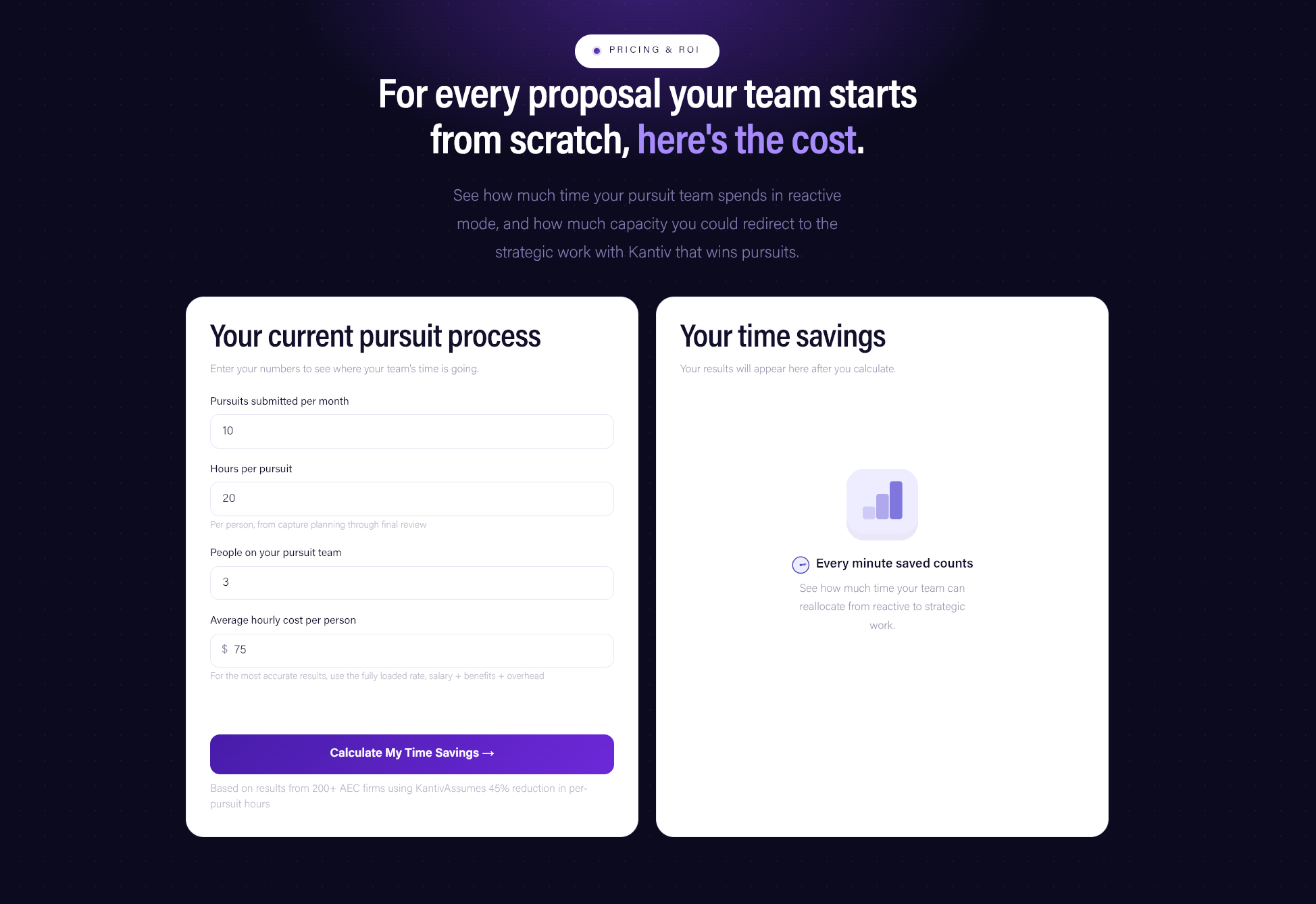
See what a modest improvement is worth to your firm.
How Kantiv helps the AEC industry in the proposal development
Kantiv is the pursuit intelligence platform built for AEC marketing and business development teams.
Most proposal tools hand you a faster way to draft. That helps, up to a point. But if the content you're drafting from is scattered, outdated, or buried in someone's 2019 folder, you're just producing polished inconsistency faster.
Kantiv is built around the knowledge underneath. Your people, projects, clients, and outcomes, all structured and searchable before the RFP lands. Your transportation group and your water group draw from the same source. The proposal reads like one firm, because it is.
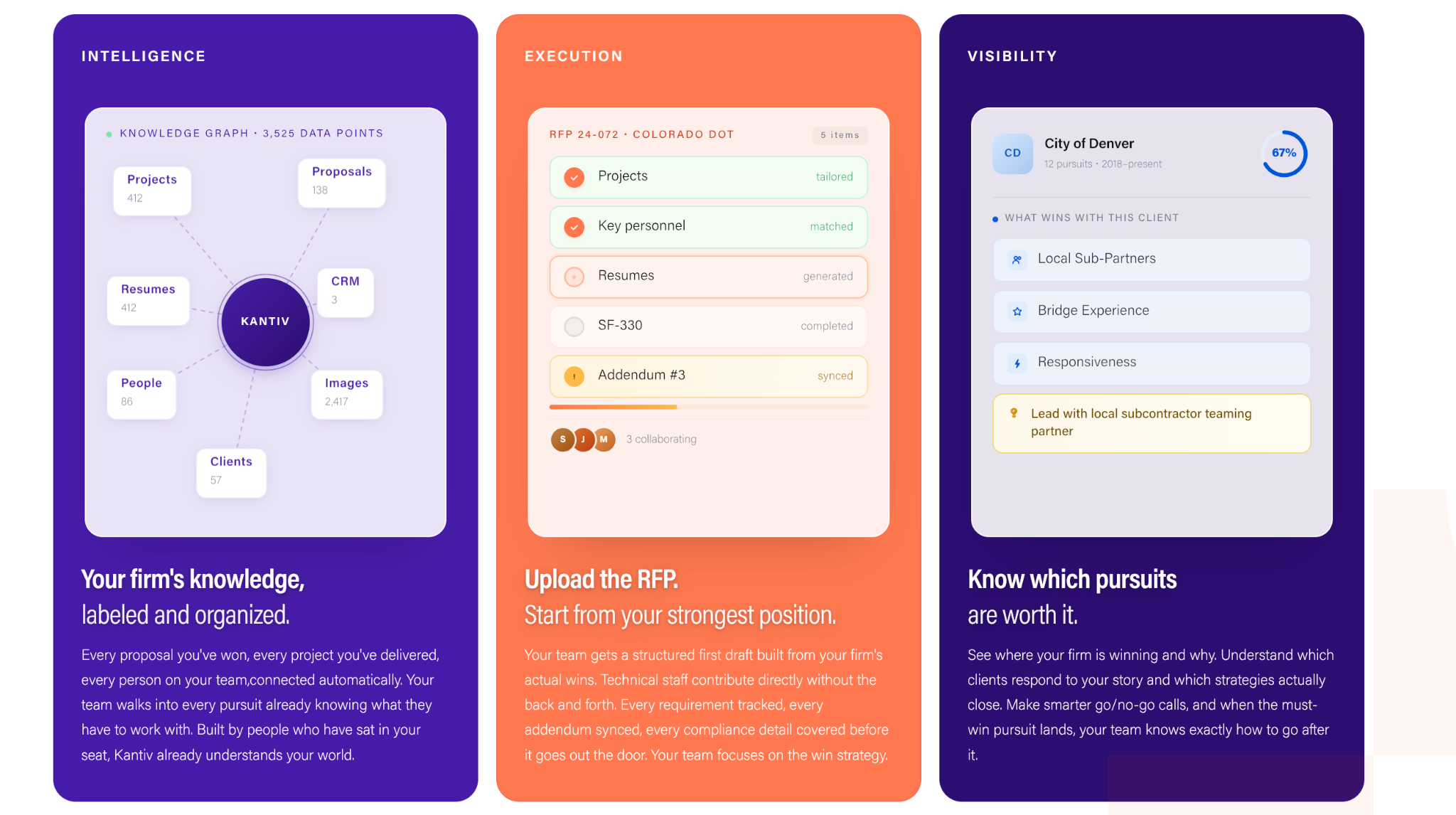
And it compounds. Every pursuit teaches your firm something: which proof points landed, which content got reused, which team combinations were strongest. That knowledge doesn't disappear when the deadline passes. It feeds the next pursuit.
Summing up
Think back to that proposal from the opening. The pressure, the scramble, the gap between what your firm could do and what the document proved.
Your firm's work is stronger than what most proposals show. The qualifications are real. The team is credible. The past performance is relevant. But the proposal process fails to present that strength clearly, consistently, and on time.
Winning AEC proposals come from a better system: cleaner go/no-go discipline, current approved content, early quality checks, consistent voice, and institutional knowledge that's ready before the RFP lands. Build that system, and you don't just submit better proposals. You learn from every pursuit and carry that knowledge into the next one.
See how Kantiv helps AEC firms build the pursuit foundation that winning proposals are built on.
FAQs
How is proposal QA different from a careful final review?
A final review is reactive. It catches problems after they've already moved through the document. Proposal QA is proactive. It builds quality into the pursuit workflow from kickoff through final delivery: approved content, compliance checks, section ownership, draft-stage review, and voice consistency. By the time the proposal reaches final review, most quality problems should already be fixed.
What is the AEC proposal process and why does it break down?
The AEC proposal process covers go/no-go, capture planning, RFP review, content assembly, technical input, compliance checks, design, review, and final delivery. It breaks down when contributors work in isolation, approved content is hard to find, and quality checks happen only at the end. The result is a proposal that may be technically strong but inconsistent, rushed, or hard to score.
Why are AEC projects lost even when the firm is qualified?
Qualified firms lose when the proposal fails to make the firm's strengths clear. Common causes include generic project examples, inconsistent voice, outdated boilerplate, weak compliance discipline, and technical sections that don't map directly to the client's evaluation criteria. Evaluators score what the proposal proves, not everything your firm knows internally.
What's the biggest single thing hurting proposal quality?
Inconsistency. Not bad writing. Inconsistency across contributors, offices, project descriptions, resumes, templates, and review standards. When every section sounds like a different version of your firm, the evaluator has to work harder to trust the response. Strong proposal QA creates one clear standard before the final review.
We already have templates. Why isn't that enough?
Templates define structure, but they don't enforce quality. They don't update old boilerplate, flag outdated resumes, catch inconsistent voices, or confirm that each section answers the evaluation criteria. A template is a starting point. A pursuit system makes sure the proposal actually follows the standard under deadline pressure.
How long does it take to see results from better proposal QA?
Most firms see the first improvements quickly when they standardize approved content, clean up boilerplate, and move compliance checks to kickoff. Voice consistency and pursuit discipline take a few cycles to fully embed. Win rate impact takes longer to measure, usually over several months, because your firm needs enough pursuits under the new process to see the pattern.
Will AI tools replace our proposal coordinator or marketing manager?
No. The best AI tools for AEC proposals support experienced proposal professionals. They handle mechanical work like finding content, checking consistency, and surfacing relevant past experience so your team can focus on strategy, differentiation, client context, and story. Judgment still belongs to the proposal team.
What if our proposals are already pretty good?
Audit the last 10 against a clear quality rubric: compliance, voice consistency, project relevance, evaluator clarity, boilerplate accuracy, and proof strength. Many firms overestimate proposal quality because they review effort, not evaluator experience. If the work is already strong, the next advantage is consistency across every pursuit, office, and contributor.